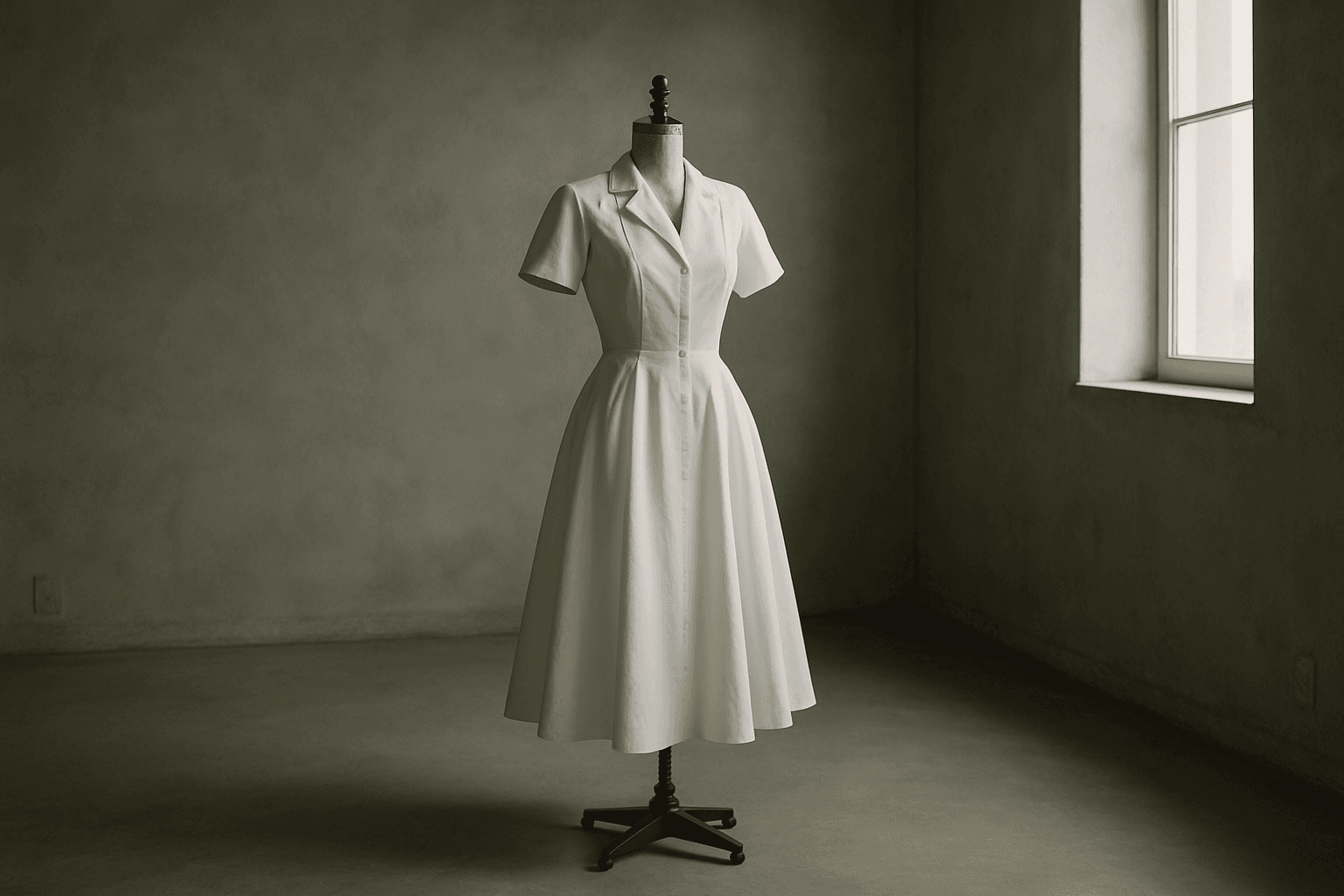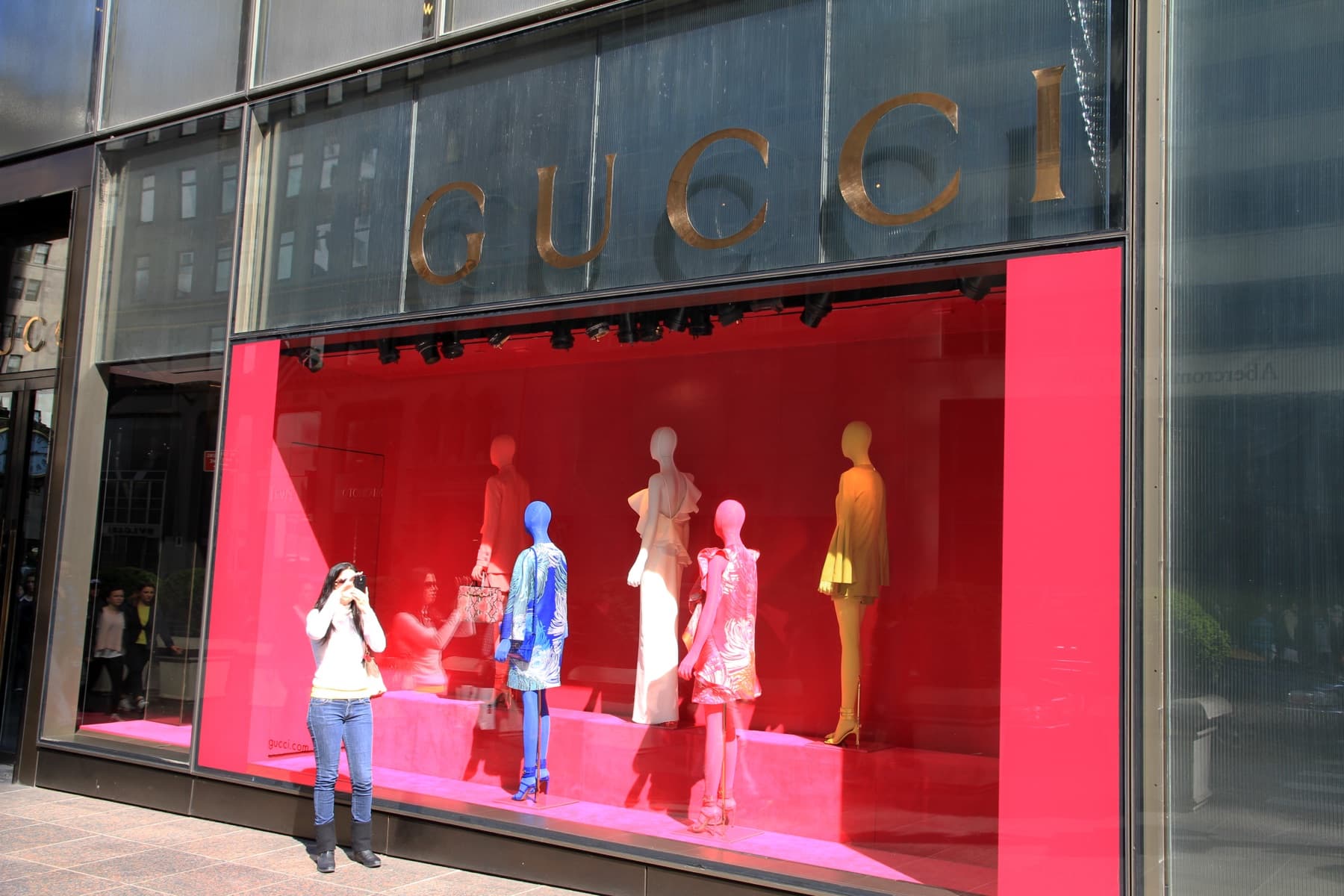
Demna joined Gucci as artistic director in July 2025, after ten years at Balenciaga, moving between two houses inside the same group. His first collection, La Famiglia, arrived as a set of characters: each look personified as a member of an unruly family, less a conventional line-up than an extended portrait gallery of the Gucci psyche.
The reading of the collection that circulated most among industry observers was that it had a clear agenda, to steady the business, reassert creative authority and rebuild the house's storytelling while revisiting heritage signatures, and that it delivered on all three.
What he actually did with the archive
Two moves, both precise.
The Bamboo 1947 bag was re-proportioned, and reviewers noted it looked fresher than an eighty-year-old design has any right to. The Horsebit loafer stayed central but was styled with sheer hosiery pieces that blurred the line between lingerie and ready-to-wear.
Neither is a redesign. Both are re-contextualisations, which is the more difficult and more valuable operation. A heritage house in trouble usually has the assets it needs already: the problem is that the assets have become inert through repetition. Changing the proportion of a bag and the styling around a shoe costs almost nothing in development and changes what the object means, which is exactly the intervention a business in a nineteen-point decline needs.
The character structure, and why it is a strategy
Building a collection as a cast rather than a coherent silhouette is unusual and, for this specific brief, logical.
Gucci's problem going into 2026 was not that it lacked a look. It was that it had lost the sense of being a place where several kinds of person could recognise themselves. The Michele years had one intensely defined customer; the years after had a quieter, more restrained proposition that struggled to compel. A collection built as a family of distinct characters is an argument that the house is broad enough to hold contradictions, which is what it was before it narrowed.
It is also, commercially, a way of putting several bets on the table at once and letting wholesale tell you which characters have customers.
The reaction was more split than the coverage suggested
The trade reception was largely positive. WWD's panel of industry figures ran generous, and the framing across most outlets was of a confident, unapologetic debut.
The fashion forums were considerably harsher, with critics calling parts of the collection cheap and dated and drawing comparisons to pieces already available elsewhere.
That gap is worth recording rather than resolving. Trade press assesses a debut against the strategic problem it was hired to solve; forum readers assess it against everything they have already seen. Both are legitimate, and on a debut this consequential the disagreement is more informative than a consensus would be. The same split, almost exactly, followed Anderson's first Dior womenswear.
The number to hold onto
Gucci fell 19% across 2025. In the second quarter of 2026 it was at -2%, after -8% in the first quarter, inside Kering's first positive group quarter in three years.
None of that is attributable to La Famiglia, which had not reached stores. What it establishes is the shape of the judgement to come: Demna arrives at a house that was falling fast and is now falling slowly, so for at least another two quarters his tenure will be reported alongside a negative number regardless of whether the work is right.
The first honest read comes when collections designed entirely under him reach wholesale, after the September season.
Collection details and reaction as reported in contemporaneous coverage, including WWD and Interview. This assessment is made from runway imagery, video and published reporting rather than from the room. Financial figures per Kering's published results.