Jonathan Anderson presented his first women's ready-to-wear collection for Dior on October 1, 2025, in Paris, having already shown his debut menswear for the house that June. His appointment gave him all of Dior's divisions, ending the split creative structure the house had run for years.
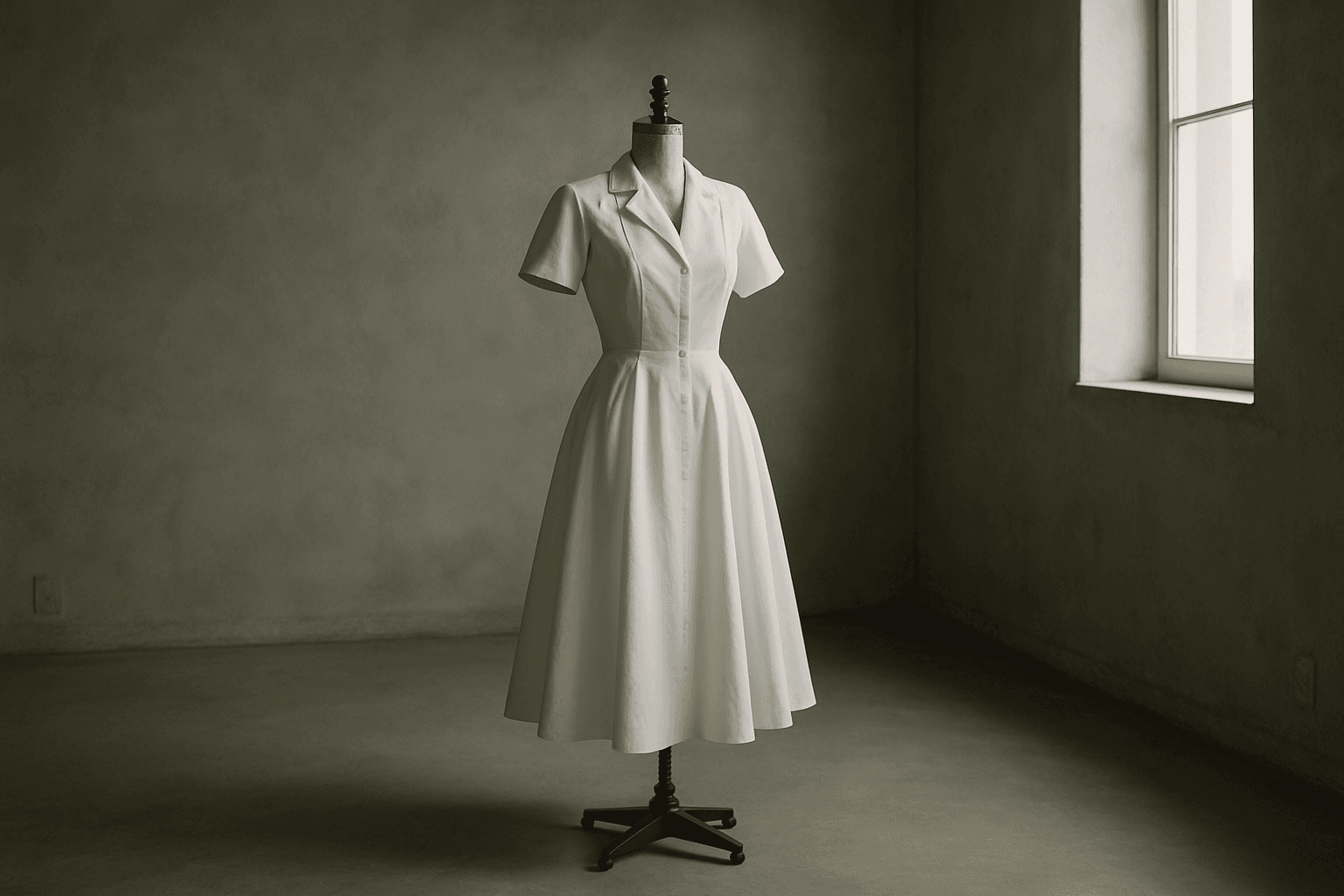
The collection opened with a white tea-length dress and moved directly at the thing everyone was waiting for: his reading of Monsieur Dior's New Look, with the calf-length skirt cut to a mini and the Bar jacket cropped. From there, bold re-imaginings of the house's classic overcoats, trouser suits worn with long capes, and, at the other end of the register, short denim skirts and clothes with no ceremony attached to them at all.
The room gave him a standing ovation. Then the argument started.
The split was the outcome, not the accident
Parisian critics read it as a lesson in gentle modernity, deliberately distant from spectacle, and praised the accuracy of the volumes, the lightness of the materials, and a staging that was sober and still emotional. Online, opinion divided immediately and sharply, and the show became simultaneously the most anticipated and the most contested of the year.
That combination is the correct result for a debut of this weight, and it is worth defending as a result rather than reporting as a controversy.
A first collection at a house like Dior has one job: to establish that the archive is now being interpreted rather than administered. A debut everyone agrees on has failed at that job, because universal approval at a heritage house usually means the designer produced a competent recital of existing codes. Cropping the Bar jacket is an argument. Arguments have opposition.
What the specific gestures were doing
The New Look is the most protected silhouette in twentieth-century fashion, and Dior's entire commercial identity descends from it. Shortening it and cropping its jacket is not a styling choice, it is a claim about who the house is dressing.
The full-length New Look was built for a specific postwar idea of the adult woman, and every subsequent Dior director has had to decide how literally to honour it. Anderson's answer was to keep the construction and change the proportion, which preserves the technical inheritance while moving the customer.
Then the denim skirts, in the same collection. Read together, those two moves say the house should be able to hold both, which is the same broadening argument Demna made at Gucci a few months later with a collection built as a cast of characters.
Where it sat in the season
October 2025 carried fifteen designer debuts, most of them concentrated in Paris, with Matthieu Blazy's Chanel debut days after this one. Anderson's had the most weight attached to it because Dior is LVMH's second-largest fashion asset and because he had been handed all of it.
His menswear debut in June had already indicated the method: recoding the house's signatures with a deliberately undone elegance rather than replacing them.
What happened next, for the record
By July 2026, LVMH's fashion and leather goods division had posted its first positive quarter in seven and the group had attributed part of that to Anderson's effect at Dior, naming him in a results statement. We went into what that credit does and does not prove in his first year.
None of which was knowable on October 2, 2025, when the only available evidence was a standing ovation and a very loud disagreement.
Show date, collection detail and reception as reported in contemporaneous coverage, including Malay Mail, Euronews and Hypebeast on the menswear debut. This assessment is made from runway imagery, video and published reporting rather than from the room.