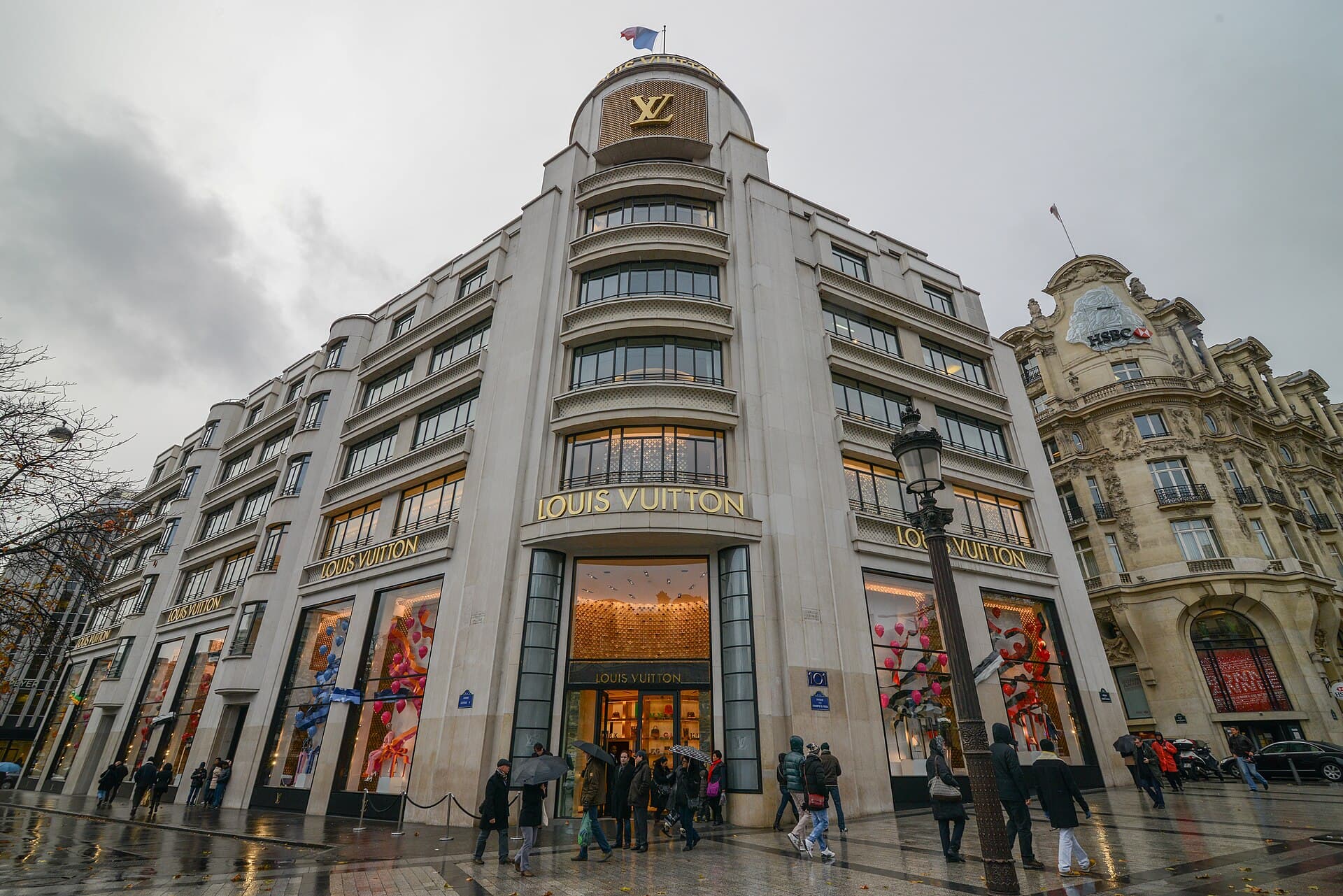
Louis Vuitton closed Paris Fashion Week on the evening of October 6. Six days later its parent company published the number that the shows are supposed to change. LVMH's fashion and leather goods division fell 5% on an organic basis in the third quarter, to €8,245 million from €8,497 million a year earlier, as reported by LVMH in its trading update of October 12.
In July we wrote that the division had grown for the first time in seven quarters, by one percent, and called it a floor, found, and not a recovery. The floor lasted one quarter.
The number, and what was expected
The group as a whole grew. Revenue was €18,504 million, up 1% organically, and nine-month revenue stands at €57,148 million, down 2% as reported and up 2% organically, as reported by LVMH. Every other division was positive in the quarter: selective retailing up 8%, wines and spirits and watches and jewelry up 6% each, perfumes and cosmetics up 1%.
Fashion is the exception, and it is the exception that counts, because it is nearly half of group revenue. Analysts had expected the division to fall 1.8%, and group organic growth of 1.3% according to a Visible Alpha consensus, as reported by Tassilo Hummel and Alessandro Parodi for Reuters. LVMH's US-listed shares fell more than 3% after the update, Reuters reported. Over nine months the division is at €26,391 million, down 4% as reported and 2% organically.
It is China, and it is Vuitton
LVMH's own wording is direct: the division "continued to benefit from the buoyant US market but was affected in the third quarter by the slowdown in demand in China." On the call, chief financial officer Cécile Cabanis put numbers on it. Asia excluding Japan fell by a mid-single-digit percentage, and spending by Chinese clients fell in the mid-teens, with clients buying inside China down by double digits and those buying abroad down mid-single digits, according to the call transcript published by Investing.com. The United States rose 5% and Europe accelerated to mid-single-digit growth.
That is the reverse of July, when Europe was the soft spot and Asia was helping. A division that changes its weak region every quarter does not have a regional problem. It has a house that is exposed everywhere at once, and Cabanis more or less said which one. Louis Vuitton took the Chinese slowdown and, on top of it, what she called "a one-off logistic and transportation disruption" that cost a little more than one point of growth, per the transcript.
Her answer to the obvious question was the most interesting sentence of the day. Asked about price, she said cutting it is not "something that is advisable," and described the aim in China as "hitting the sweet spot between desirability on one hand and perceived value on the other hand," according to the transcript. Reuters reported her ruling out "drastic measures." Read that as an admission as much as a refusal. A house does not talk about perceived value unless clients have started doing the arithmetic.
The houses that changed designers are holding
Here is what the headline number hides. LVMH wrote that "the creative renewal of our Maisons bore fruit," and for once the corporate sentence is supported by the detail under it.
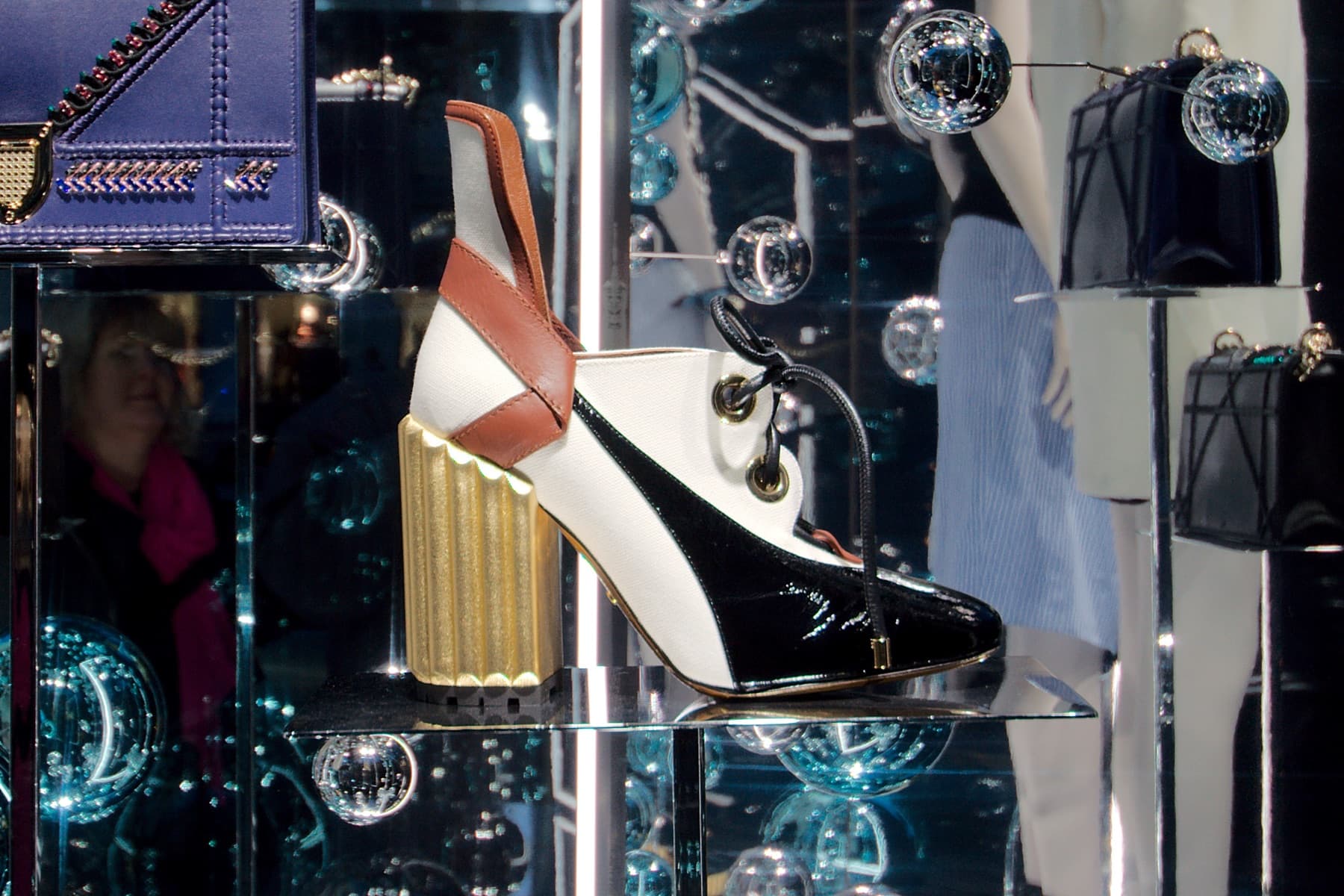
Dior was flat in the quarter and is positive for the year, with double-digit growth among American clients and the strongest demand in women's ready-to-wear, while menswear is "less advanced," according to Cabanis in the transcript. Flat is not a triumph. But it is flat in a quarter when the division fell five points, and it comes little more than a year into Jonathan Anderson's tenure, which is early for clothes to be carrying a house that lives on bags. Celine under Michael Rider was described in the release as "a major success," and on the call as becoming a growth driver, led by the United States. Loro Piana was named an outperformer. Fendi's Baguette, revisited by Maria Grazia Chiuri in softer materials, is selling. Loewe was called "a journey," which is the polite word for not yet.
So the season's argument and the quarter's argument point the same way. We spent three weeks writing that Paris had stopped rewarding spectacle and started asking whether the clothes would be worn. The houses inside LVMH that bet on product people recognise as new, a Rider trouser, an Anderson jacket, are the ones offsetting the drop. The house that did not change designers, that marked the 130th anniversary of its Monogram this quarter with a reissue, is the one pulling the division down.
That is not a verdict on Nicolas Ghesquière or Pharrell Williams, whose collections LVMH says "gained momentum." It is a matter of scale. Vuitton is so large that Dior, Celine and Loro Piana can all do well and the division still shrinks. Creative renewal works. It does not yet work at the size where it would show.
What this does to Shanghai
Two weeks ago we read Dior's choice of Shanghai for Cruise 2028 as a bet that the Chinese client was worth courting in person again. These results make the bet look less like confidence and more like necessity. Chinese clients spent mid-teens less in the quarter; the group's flagship event for next May is in their city. Cabanis did say September was better than the quarter's average, including for Chinese clients, per the transcript, and offered no timeline for a recovery.
What to watch
Three things. Kering and Hermès have yet to report their own third quarters, and they will show whether China is a Vuitton problem or everybody's. LVMH's full-year results will be the first to include the holiday quarter. And that fourth quarter itself, which Cabanis framed as a matter of execution, not of waiting for China: she said short-term cost cuts "will not bring additional sales."
The July headline was one percent. The October one is minus five. Neither is the story. The story is that the same division now contains houses that are growing because they changed and one that is too big to change quickly, and in this quarter the second outweighed the first.
Divisional and group figures, the regional statement and the house-by-house commentary as reported by LVMH in its third-quarter 2026 revenue release (October 12, 2026); organic figures are at constant scope and exchange rates. Analyst expectations, share reaction and "drastic measures" per Reuters (Tassilo Hummel and Alessandro Parodi, October 12, 2026). Regional and client breakdowns, Louis Vuitton, Dior, Celine, Fendi and Loewe remarks by Cécile Cabanis per the earnings call transcript published by Investing.com (October 12, 2026). Also reported by WWD.