We argued earlier this year that resale platforms are not competing on inventory but on proof: anyone can list a handbag, and the business is in being believed. Authentication teams, trained eyes, and the accumulated cost of getting it wrong are the moat.
The EU's Digital Product Passport contains one clause that goes at exactly that moat. The passport has to remain available throughout the product's life, including resale and end-of-life.
What that clause means in a shop
Today, proving a secondhand garment is genuine is an act of expert judgment. A person looks at stitching, hardware, labels and wear, and their employer's reputation stands behind the verdict. That expertise is expensive, slow, hard to hire and, crucially, owned by the platform.
Under the passport, a garment made for the European market arrives with a manufacturer-issued record attached to it, reachable by pointing a phone at a tag. Fibre composition, country of manufacture, compliance, certifications. Not a platform's opinion about the object: the maker's own declaration, travelling with it.
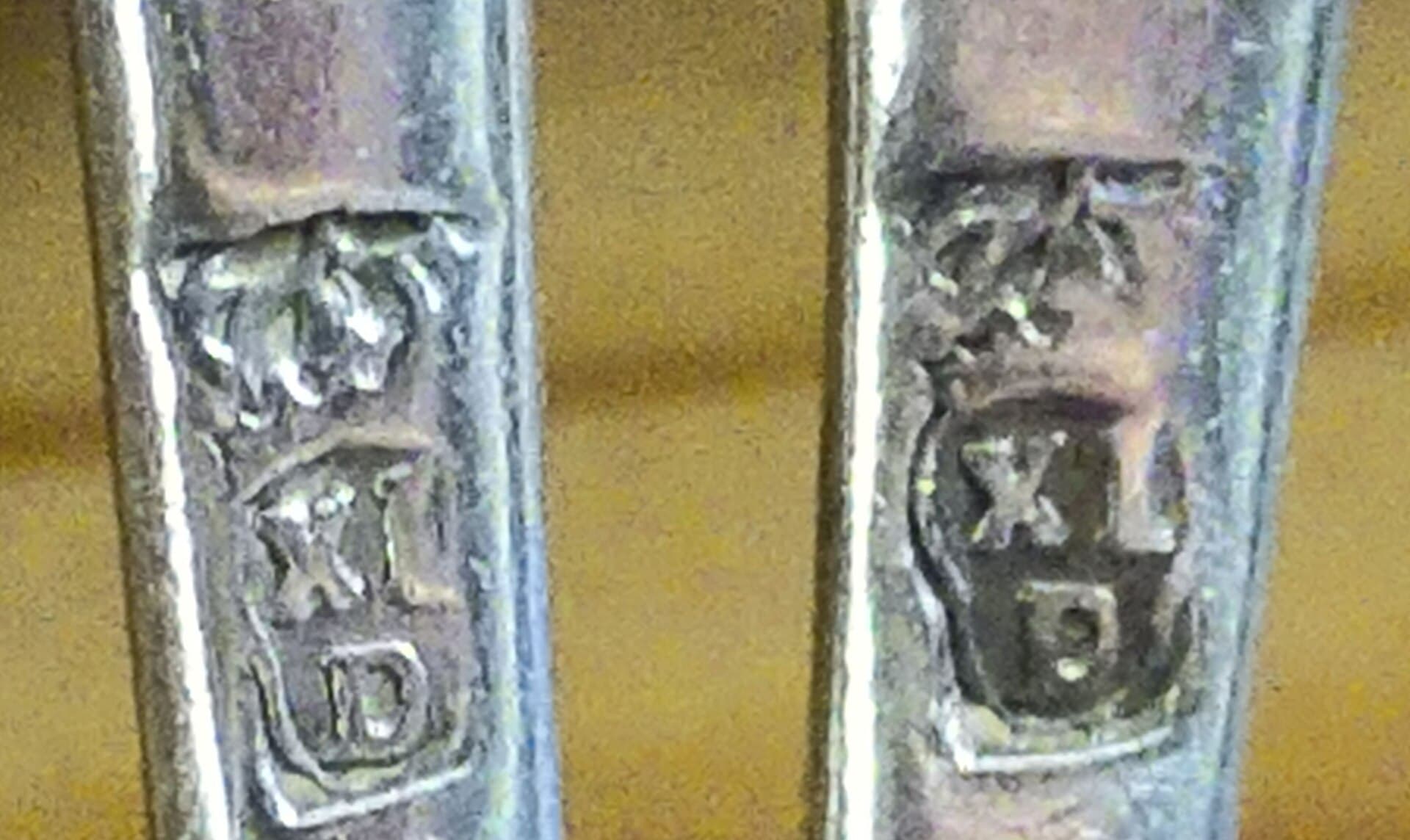
The trade that solved this problem first solved it this way. A silver hallmark is a stamp applied at origin by an assay office, and it is why nobody employs a room of experts to decide whether a spoon is silver.
Why it is not a clean kill
Three reasons the moat does not simply drain.
Counterfeits will carry passports too. A tag is data, and data can be cloned. The passport proves a record exists, not that this object is the object the record describes. Binding the two together is a hard security problem and the regulation is not primarily trying to solve it.
Coverage starts empty. The passport applies to products placed on the market after the rules bite, realistically 2028. The resale market is overwhelmingly made of things sold before that. A 2019 handbag will never have one, and 2019 handbags are the inventory.
Condition is not authenticity. Even with origin settled, somebody has to say what state the thing is in and what it is therefore worth. That judgment is most of the customer-facing value and the passport does not touch it.
What it changes anyway
It changes the direction the advantage flows.
Authentication as a platform capability gets more valuable the longer you do it, which favours incumbents and punishes entrants. Authentication as a manufacturer-issued record is a commodity available to everyone equally, including a brand's own resale channel, a department store, or a marketplace with no expert staff at all.
Over a decade, the share of secondhand inventory carrying a passport only goes one way. The platforms' proof advantage does not collapse; it stops compounding, and a moat that has stopped getting deeper while the market keeps growing is a moat that is being crossed.
It is also worth noticing who gains most: the houses. A brand that issues the passport becomes the authority on its own secondhand goods, which is a considerably better position than the one the resale market has put them in so far, and it explains a good deal about why so many of them are now building resale in-house.
What to watch
Whether the platforms start issuing their own records for pre-passport inventory. If the incumbents move to make everything before 2028 legible on their own terms, they understand the threat. If they treat the passport as a compliance matter for the brands, they do not.
Passport requirements and timeline per the ESPR and the JRC textile specification, summarised by Carbonfact. Compliance dates for textiles are indicative.