Paris haute couture for Fall/Winter 2026-27 ran July 6 to 9, bringing thirty houses to the schedule. It was a week defined by handovers as much as by the clothes, which is now the permanent condition of a couture calendar sitting on top of the largest set of creative-director changes in modern luxury.
Two debuts:
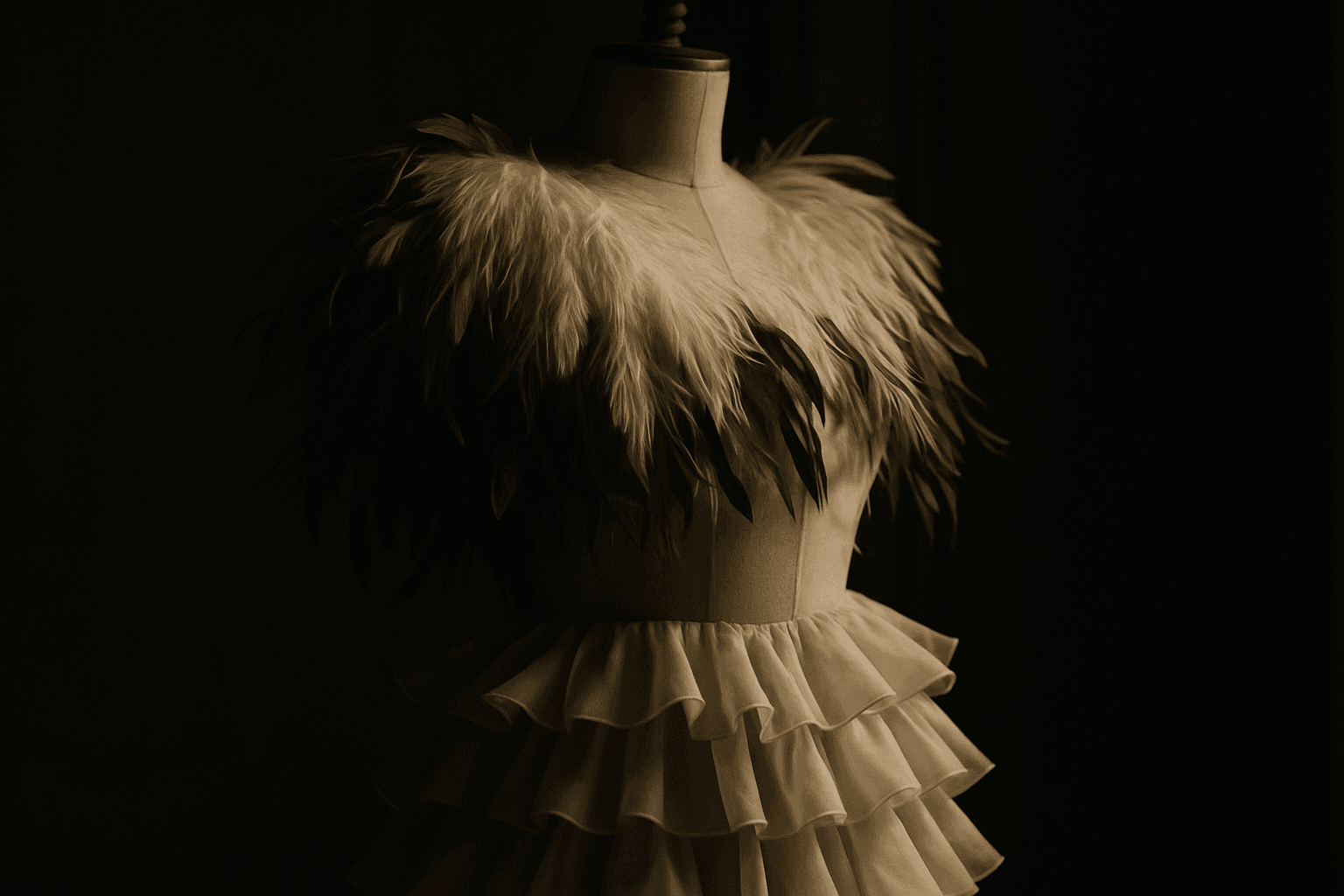
- Pierpaolo Piccioli presented his first couture collection for Balenciaga, working in voluminous ruffled gowns and looks built entirely from feathers. We wrote about it separately in the Balenciaga debut.
- Duran Lantink made his debut at Jean Paul Gaultier, with a deconstructive, technology-inflected sensibility that sat oddly and interestingly against the house's couture tradition.
Two second collections:
- Matthieu Blazy's sophomore couture at Chanel ran on beanstalk heels and climbing vines, extending the fabulist register he had already established in his January couture outing. His ready-to-wear debut in October 2025 is still the reference point for the whole reset.
- Jonathan Anderson's second Dior couture drew on sculptural references and hand-finished detailing, a visible step from the argumentative mode of his womenswear debut toward something built to last more than one season.
And one collection that had nothing to do with succession: Rahul Mishra's Devi: The Eternal Muse, pulling from the Ajanta Caves, a twelfth-century stone dancer from Karnataka, and the Tarakeshwara Temple.
What the week looked like as a whole
Reviewers converged on two observations across the four days: an appetite for sculptural, architectural silhouettes, and a willingness to work in materials couture rarely touches. Colour ran toward deep, saturated reds.
Read structurally, both make sense as a response to the moment. A designer's first or second couture collection at a house that is not theirs yet has to be legible at a distance, in a single photograph, to people who will never see the garment. Sculpture photographs. Volume photographs. Subtlety of cut, which is what couture is actually for, does not.
Unfamiliar materials do the same job from the other direction. A designer establishing that they will not simply operate the house's existing vocabulary needs something visibly outside it, and material is the fastest way to signal that without abandoning the codes entirely.
Why couture is where the transitions get tested
Couture is commercially marginal and strategically central, and that combination is the whole point.
The client base is tiny. The production cost per garment is indefensible on its own terms. Almost nothing in a couture collection is made to be reproduced. What the week actually produces is a demonstration of what a house's ateliers can do and what its new creative director thinks the house is, delivered to the small number of people who buy at that level and the very large number who will buy a bag on the strength of the impression.
So for a house mid-transition, couture is the cheapest possible place to make an expensive-looking argument. Piccioli's feathers at Balenciaga cost the group a great deal less than a wrong ready-to-wear season would.
The number that frames it
Thirty houses on a couture schedule is a healthy count in a year when the group results showed fashion and leather goods only just returning to growth, up 1% in a quarter after seven negative ones.
Couture spending is the last thing a group cuts, because it is the clearest signal of confidence available and cutting it says something no press release can walk back. Thirty houses showing in July 2026 is therefore a data point about intent, and it aligns with the six houses that came back onto the Paris ready-to-wear calendar for September.
Schedule and participation per the Fédération de la Haute Couture et de la Mode. Collection descriptions are drawn from runway imagery and published reporting, including WWD, rather than from the room.